Coarse dry sea salt is ideal — but flakes and damp crystals are a different story. Which sea salts grind cleanly in a ceramic mill, and which jam it.
Yes — coarse, dry sea salt is the ideal filling for a salt grinder. It’s exactly what the mechanism is designed to crush. There’s just one condition and one exception worth knowing before you fill up.
The one condition: a ceramic core
Sea salt is safe in a grinder only if the core is ceramic. Salt corrodes steel burrs — they pit, then rust stains the seasoning. Ceramic is chemically inert around salt and stays sharp for years, which is why salt mills standardized on it. If you’re unsure what’s inside a mill, check before you pour; the mechanism guide explains how to tell. Every set in our wooden ranking uses a ceramic core.
The one exception: flaky finishing sea salt
Not all sea salt is grinder-friendly. Flaky, damp finishing salts — Maldon, fleur de sel — are meant to be pinched by hand, not ground. They’re moist and irregular, so they clump and jam the mechanism. Keep those in a pinch bowl and put dry, coarse crystalline sea salt in the grinder.
Sea salt, type by type
“Sea salt” covers everything from fine shaker salt to hand-harvested flakes, and they don’t all behave the same in a mill:
| Sea salt | Grinds? | Why |
|---|---|---|
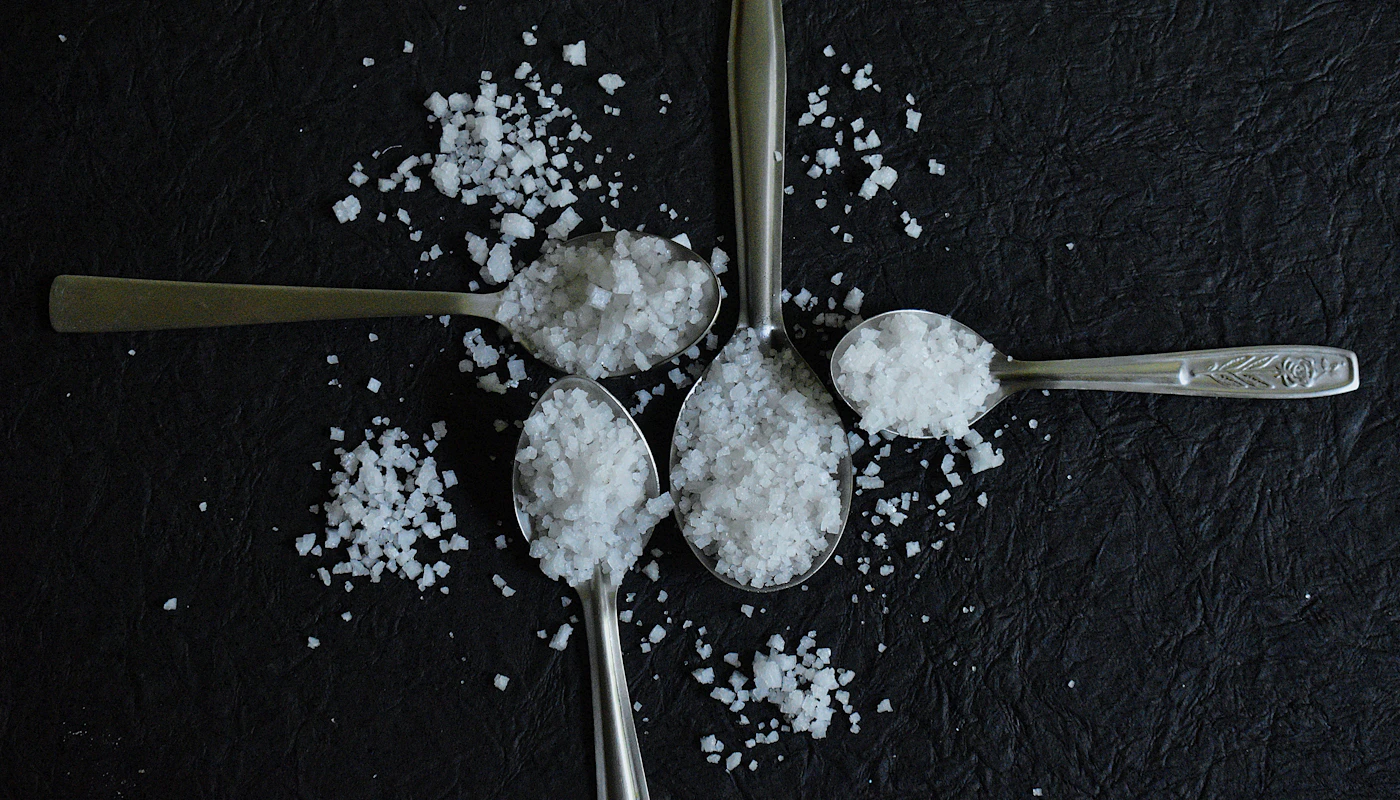
| Coarse crystalline (grinder salt) | Yes | Dry, hard grains — the intended filling |
| Coarse grey / Celtic (sel gris) | If dried | Naturally moist; spread and air-dry first |
| Fine sea salt | No | Small crystals pour straight through |
| Flaky (Maldon) | No | Soft, damp flakes clump and bridge the core |
| Fleur de sel | No | A finishing salt — pinch it by hand |
The pattern is simple: dry and coarse grinds; damp or fine doesn’t. Celtic grey is the one worth rescuing — it grinds fine once you dry it on a tray for a day.
How to do it right
- Use dry, coarse sea salt — the kind that pours freely.
- Fill to about four-fifths so crystals can tumble toward the core.
- Keep the mill away from the stove’s steam so the salt stays dry.
That’s it. For the full filling technique see the refill guide, and for the wider question of what else belongs in a salt mill, our what-to-put-in-a-salt-grinder guide has the full list.
Frequently asked questions
Not at all, as long as the grinder has a ceramic core — dry coarse sea salt is exactly what it is built to grind. Only steel-burr mills have a problem with salt, because salt corrodes steel.
No — flaky, damp finishing salts clump and jam the mechanism. They are made to be pinched by hand. Use dry, coarse crystalline sea salt in the grinder instead.
Only if it has a steel core. Ceramic cores are rust-proof and unaffected by salt, which is why they are the standard for salt mills.
Coarse enough to pour freely — think grains, not powder. Powder-fine salt packs and absorbs moisture; large dry crystals feed the mechanism cleanly.
Only after drying it. Celtic grey salt is harvested damp, and moist crystals clump and jam a mill. Spread it on a tray for a day until it pours freely, then it grinds fine in a ceramic core.
No — fine sea salt crystals are too small to be crushed, so they pour straight through unground. Save fine salt for baking and fill the grinder with a coarse, dry sea salt.
Ready to upgrade your grinder?
Compare Haomacro sets and find your fit.